
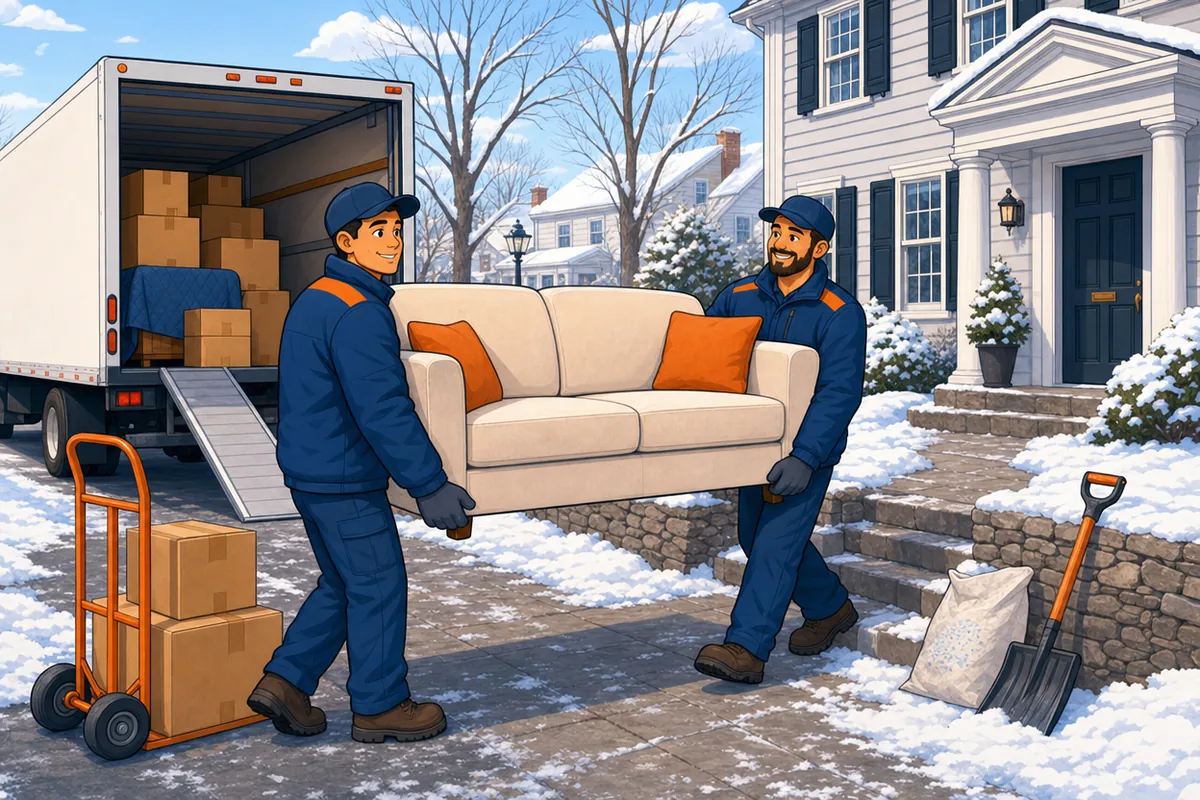
Check the whole walking route
Start at the front door and walk the exact path we’ll use, from the truck to each room. Look for the hazards that are easy to miss in winter, a cracked step hiding under snow, a loose handrail, a tight turn where a big box catches, a doormat that slides.
Clear snow and ice from the whole path, not just the porch.
If the driveway’s long, check for low branches that could scrape the truck or a loaded hand truck.
Indoor paths matter too.
In winter you tend to gather stuff by the door, boots, a shovel, a bag of salt. Move it out of the way before moving day. Tape down loose cords and pull up throw rugs that could slip underfoot. If you have stairs, make sure the lights work at the top and bottom and swap any dead bulbs. A well-lit stairway is safer for everyone carrying boxes.
If your building has a shared entrance, check the snow-removal schedule with management. A path that’s clear at 8 a.m. can be icy by noon. You can’t control the plow, but you can ask the office when it’s expected and plan around it.
Keep meltwater off the carry path
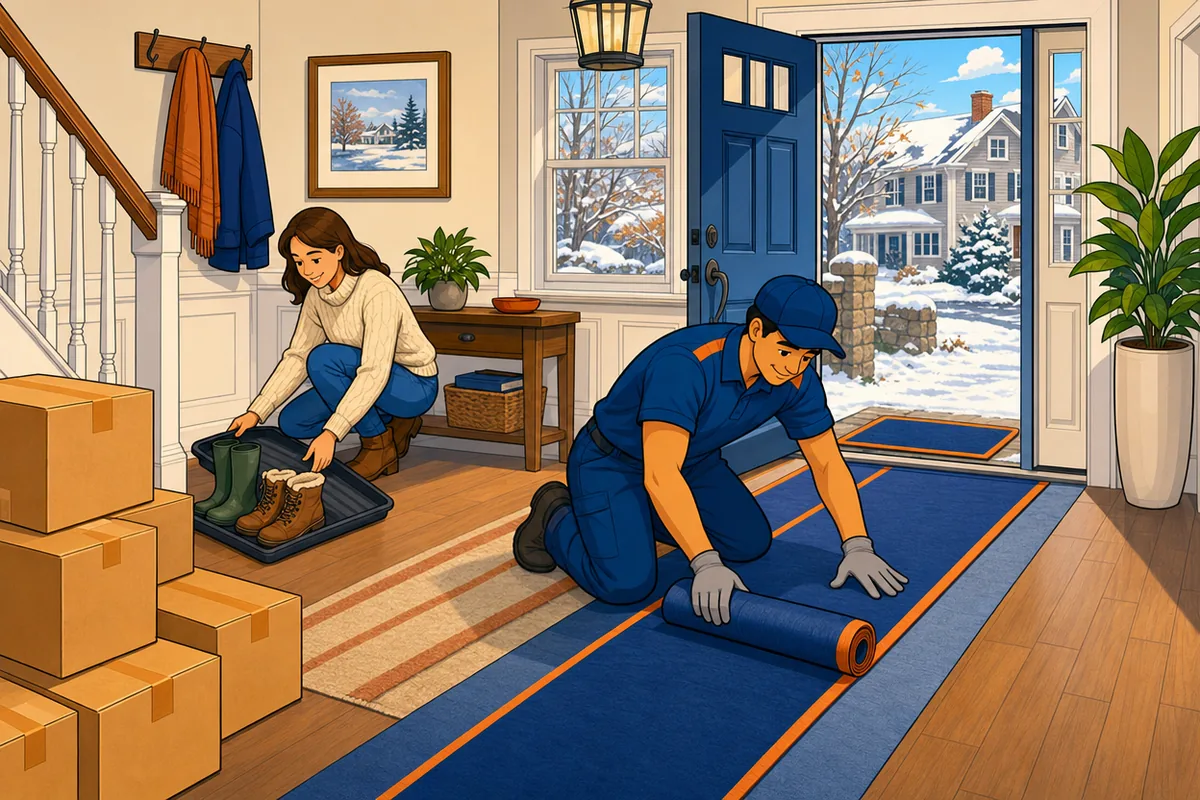
Before moving day, confirm who’s clearing snow and ice from the entrances, stairs, and parking areas at each property.
- If any ice stays, let us know so we can plan around it.
- Ask what floor protection makes sense for your surfaces and conditions, and flag any slippery spots before we start carrying.
- Confirm any unanswered details before moving day.
- Keep the agreed plan available to everyone involved.
Tell the team if your inventory, access, or timing changes.
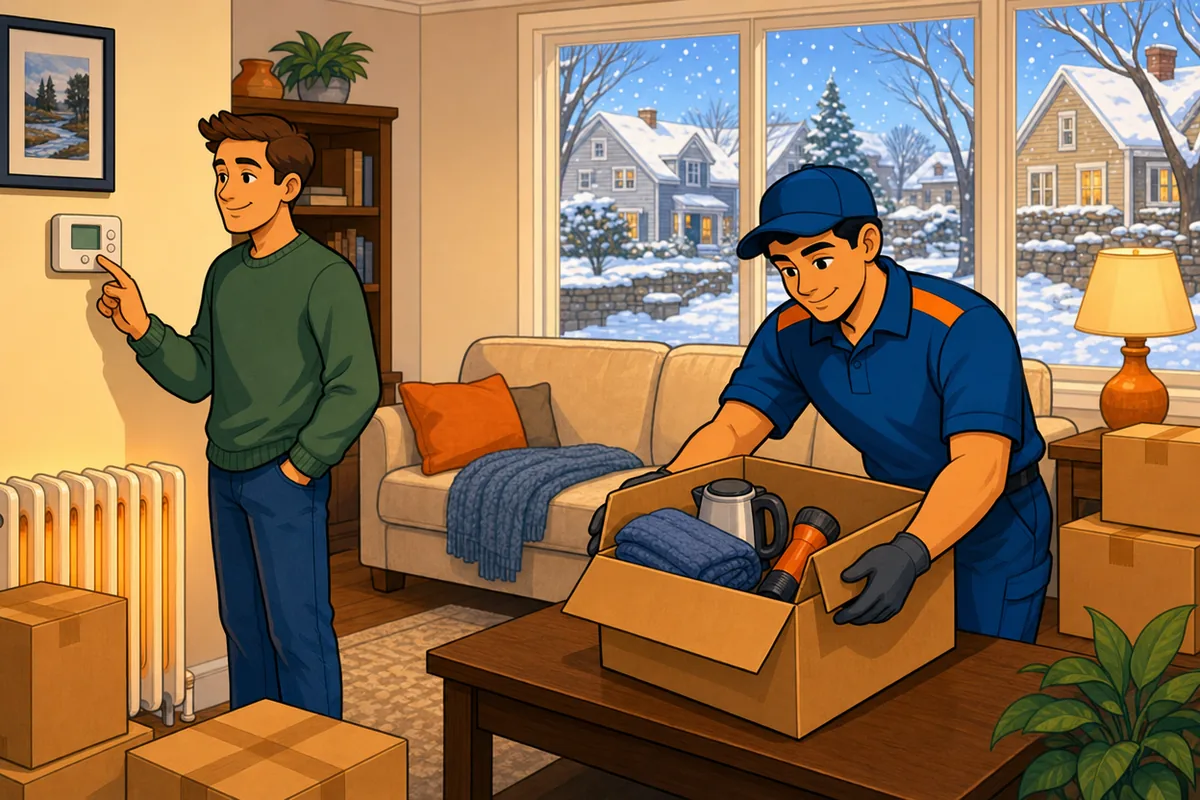
Get heat and essentials lined up
Make sure the heat’s on at both places before the move so everyone’s comfortable. Keep warm layers, meds, water, and a phone charger in a bag you keep with you, especially if there’s any chance of a delay. Pack a separate first-night bag that stays with you, not on the truck. In winter that means more than a toothbrush:
- Warm layers, gloves, and a hat for you and anyone helping
- Phone chargers and a power bank
- Medications and any pet supplies
- Snacks and water
- A flashlight and extra batteries
- Paper towels and a basic first-aid kit
Agree how you’ll talk about weather changes
Pick a contact person for weather updates before moving day. If conditions shift, a sudden snowstorm, icy roads; tell us right away. The crew makes the final call on whether it’s safe to work, and if the timing needs to move, we’ll sort that out together.
If you’re moving out of a building with a loading dock or a narrow street, ask about snow-removal coordination.
We may need to park closer or use a different entrance if the usual spot is blocked, and it helps to have a backup plan for where boxes go if the truck is delayed.
For moves within Connecticut, you can work these details out when you get your estimate.
Make sure it includes stairs, elevators, parking, and building instructions.
Ask for an updated estimate if the inventory or the services change.
That way you’re not guessing about access or cost on a cold morning. If you’re still picking a mover, local movers in Norwalk, CT can give you a sense of how crews handle winter conditions around here.
A short planning checklist
- Check the whole walking route.
- Keep meltwater off the carry path.
- Get heat and essentials lined up.
- Agree how you’ll talk about weather changes.
- Keep your contact details and moving arrangements easy to find.
Tell the team if your inventory, access, or timing changes.