
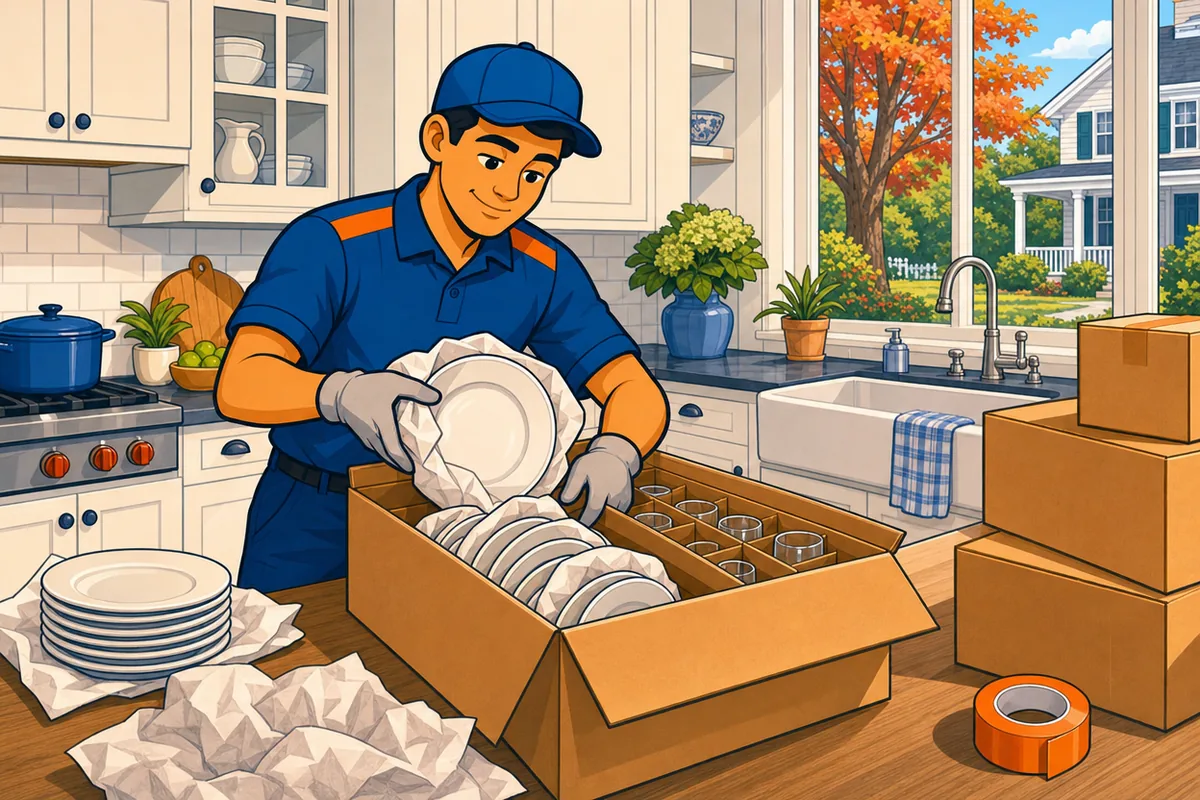
Choose the right cartons
Use small, sturdy dish packs, nothing damaged or soft. Don’t overfill; leave a little room so the top closes flat, and fill the gaps with padding so nothing shifts.
Keep dish boxes out of the walkways so the crew can move past them safely. Line the bottom with crumpled packing paper or a few sheets of bubble wrap for a soft landing.
You’ll also need clean packing paper, tape, and a marker. Skip the newspaper: the ink can transfer to your dishes, especially the porous or glazed ones.
Wrap the plates and fill the gaps
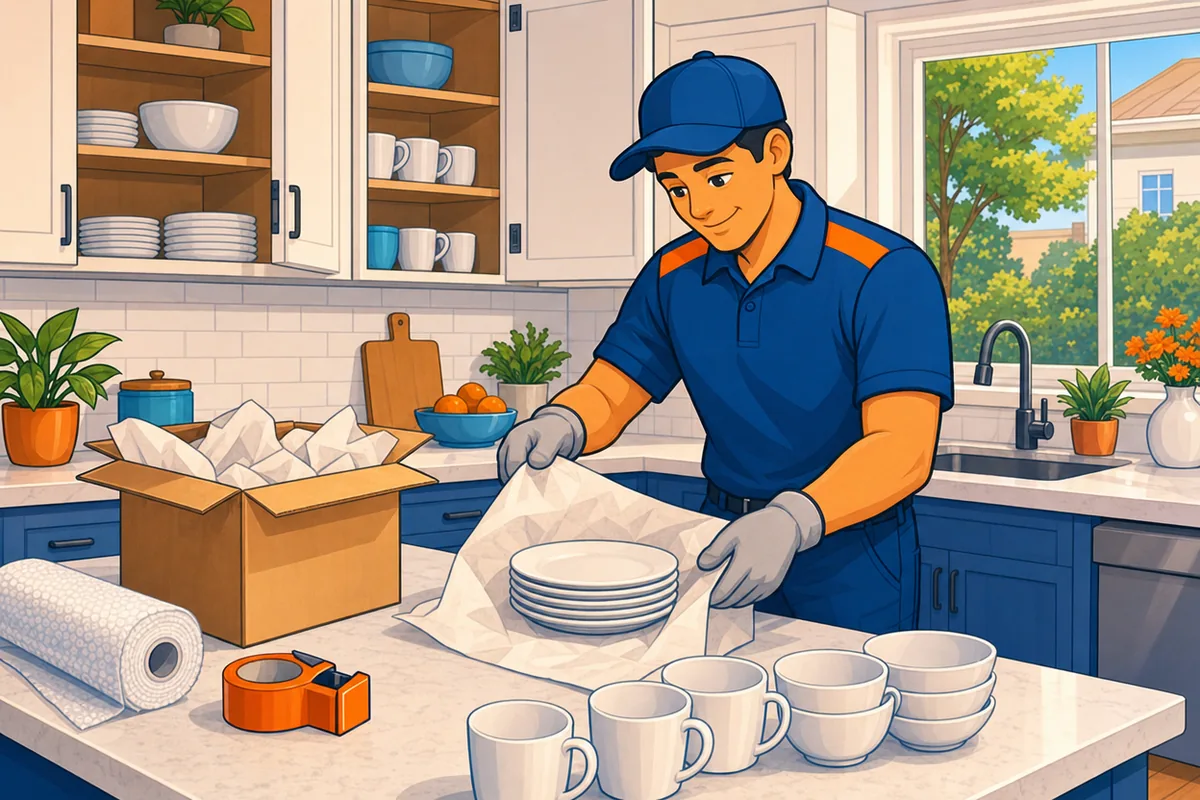
Plates travel best standing on edge, like files in a drawer. That spreads the weight so the stack won’t crack under its own pressure.
Wrap each plate like this:
Lay a sheet of packing paper flat, set the plate in the center, and fold the paper over it.
Fold the sides in toward the center, then roll the plate forward until it’s fully wrapped. Tape the ends so the paper stays put.
For your heaviest or most valuable plates, add a second layer of paper or a sheet of bubble wrap. After each plate, check that the paper covers the face and rim and the ends are taped flat.
Bowls and saucers nest well in groups of two or three with a layer of paper between each piece. Wrap the whole stack together, it saves space and still protects each one.
Give glasses their own protection
Don’t put glasses in with the plates. Stems and rims are fragile, and a heavy plate will crush them. Pack glasses in their own box, a dish pack or a small box with dividers. No dividers? Make some with strips of cardboard. Wrap each glass on its own.
Start at the bottom, spiral the paper around the bowl of the glass, then wrap the stem and rim.
- For stemware, keep it loose enough that the rim isn’t under pressure, and stand it upright in a divided box.
- Place wrapped glasses upright, not on their sides; the base is the strongest part.
- If you have to lay them down, cushion them fully and keep them from touching.
- Fill the spaces with crumpled paper so nothing shifts on the ride.
Close the box and keep a first-night set
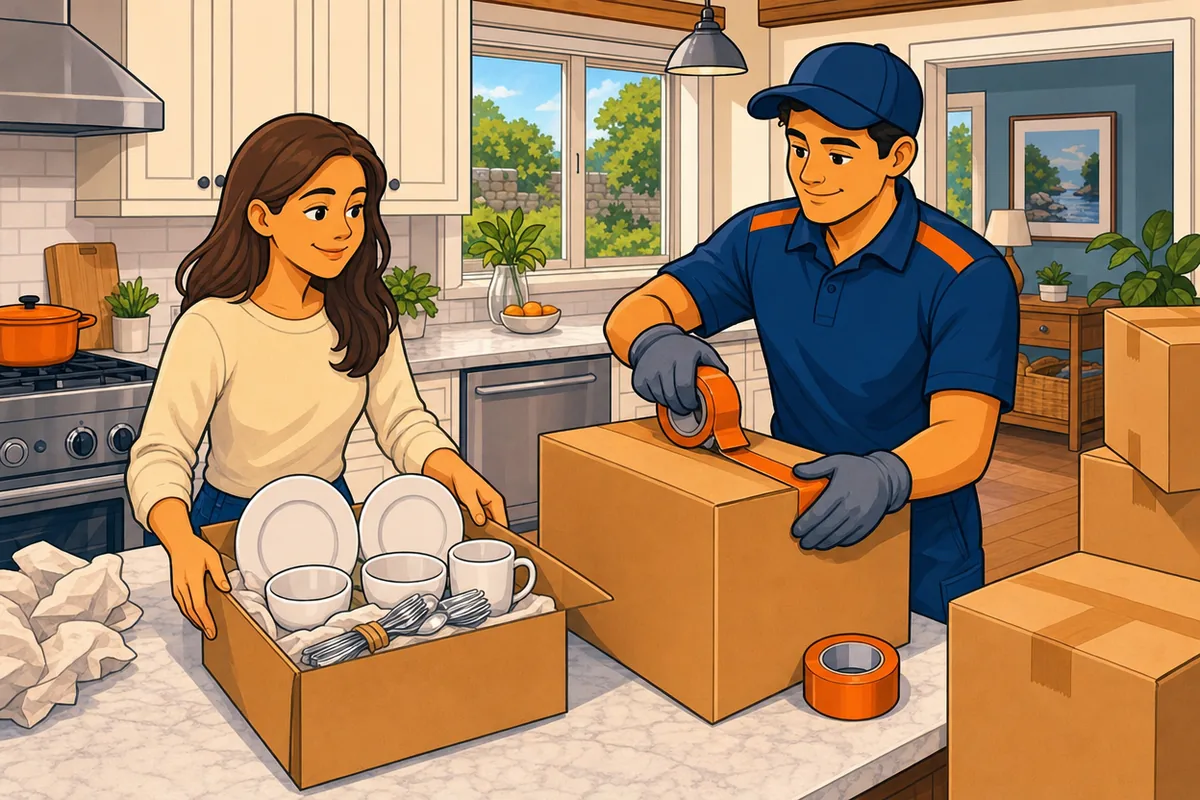
When the box is full, not too full, add a final layer of crumpled paper on top, fold the flaps, and tape it shut with strong packing tape.
- Label the top and at least one side: “Kitchen, dishes” and “Fragile.”
- Write the room so it lands in the right place.
- Don’t stack heavy boxes on a dish box.
- Set it somewhere stable where it won’t get crushed, and keep heavy loads off the fragile cartons.
If we’re moving you, tell the crew lead which boxes are fragile so we load them where they’re least likely to take a hit.
Before you seal the last box, set aside a small OPEN FIRST carton with the dishes you’ll need right away, two plates, two bowls, two mugs, a few pieces of flatware. Label it “Open First.”
- It rides on the truck, and the crew keeps it marked so it can come off early when the load allows.
- Keep your personal DO NOT LOAD bag, meds, documents, keys, with you, not on the truck.
If you’d rather skip the wrapping, our packing services in Norwalk handle the whole job, wrapping to labeling, so you can focus on the rest of the move.
A short planning checklist
- Choose the right cartons.
- Wrap the plates and fill the gaps.
- Give glasses their own protection.
- Close the box and keep a first-night set.
- Keep your contact details and moving arrangements easy to find.
Tell the team if your inventory, access, or timing changes.