
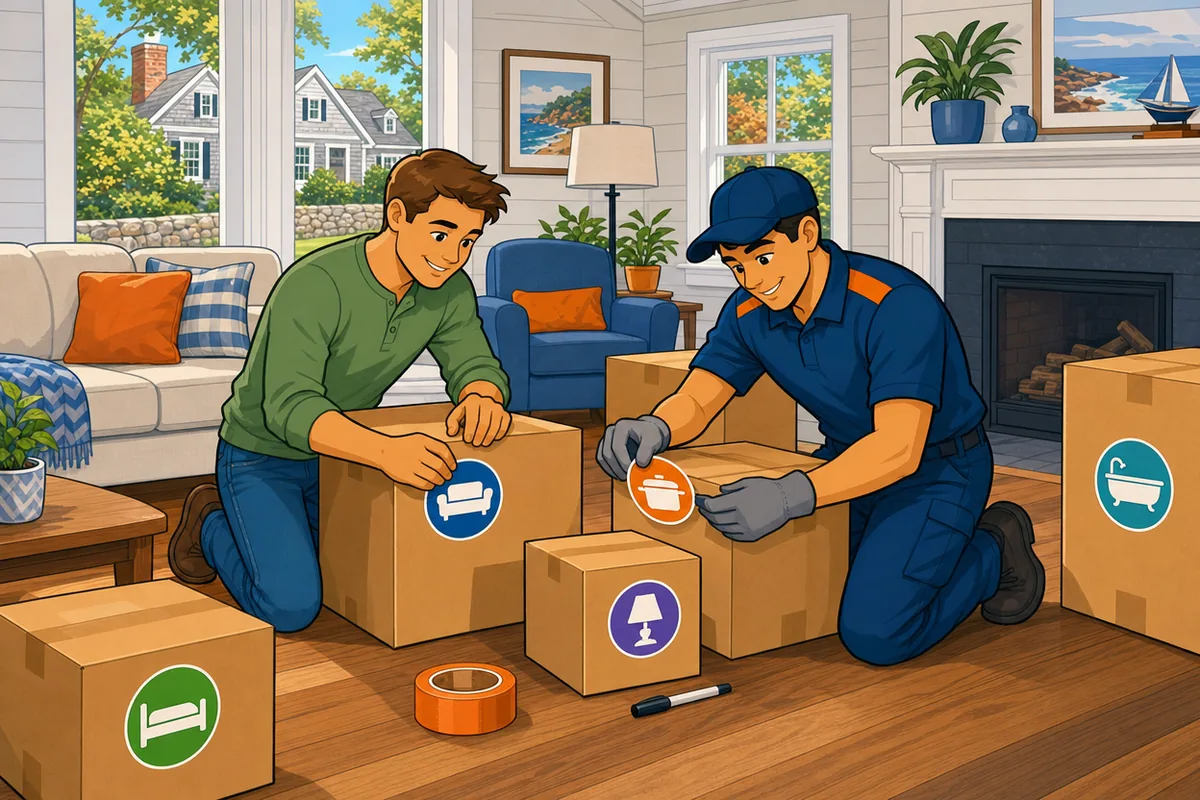
Name the destination rooms first
Before you label a single box, walk through your new Connecticut home and write down where each group of boxes will land. Use plain, obvious names: Kitchen, Living Room, Primary Bedroom, Kids Room, Office, Basement, Garage. Avoid clever or temporary names like “the sunny room” or “Mom’s space”; they mean nothing to someone who’s never seen the house.
Don’t combine distinct rooms just to shorten the list. A hallway closet and a guest room are different destinations; call both “Guest Room” and someone carries boxes to the wrong door. Keep one name per destination and write the same name on every box that belongs there.
If a room has two obvious areas, pick one name and stick with it. Once the list is final, save it on your phone and keep a copy in your car or moving folder. You’ll need it when you make the door signs and when you give the crew a quick rundown before unloading.
Write labels on the sides people see
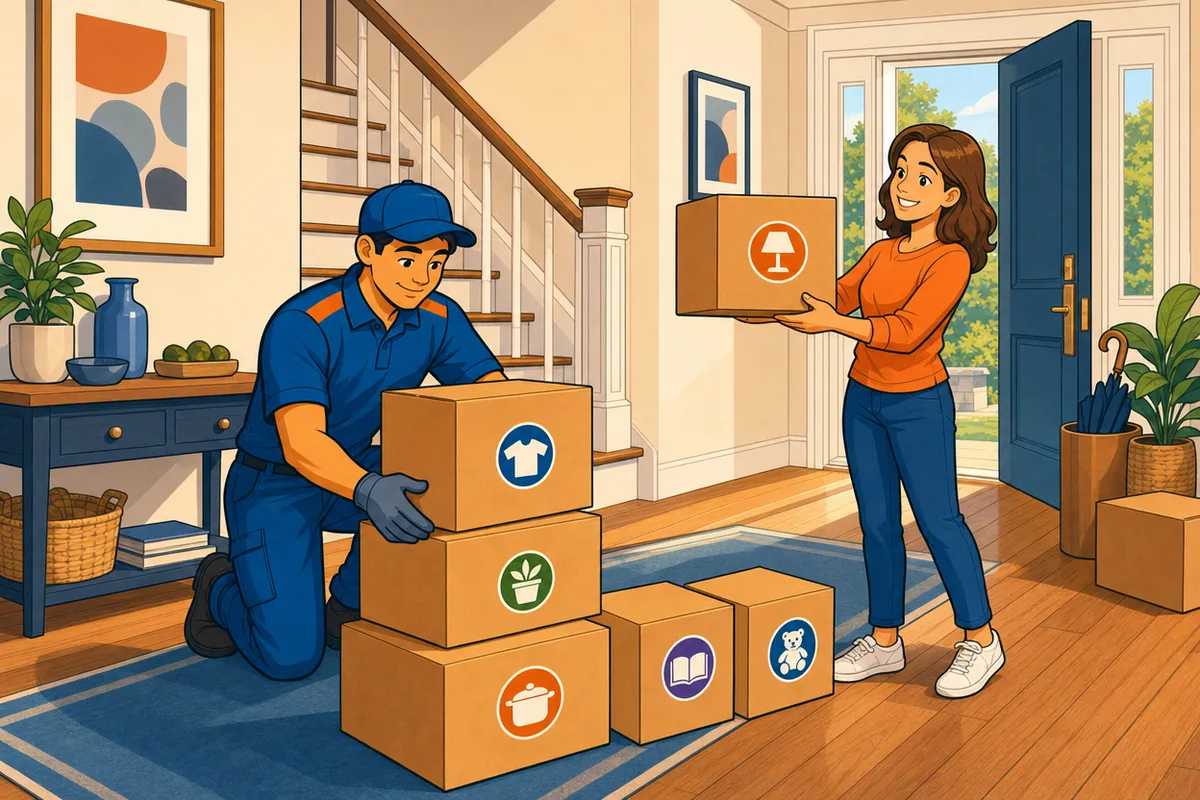
A label on the top of a box is useless once it’s stacked.
Write the room name on the top and on at least two opposite sides with a thick marker; the sides are what a mover sees when a box is on a dolly or in a stack.
Color coding helps, but it’s an extra layer, not a substitute.
A strip of colored tape on the kitchen boxes lets a mover sort without reading every word, but write the room name too, in case the tape falls off.
Keep the room name big, then add a short contents note below it: “Kitchen, pots” or “Office, books.” The note helps the crew place the box with common sense, but it doesn’t tell them to unpack it or pick a specific shelf.
If you want boxes on certain counters or shelves, point that out to the crew lead before we start unloading.
Keep priority and fragility separate
Fragile and priority are different instructions. A box can be fragile but not urgent, or urgent but not fragile. Use two separate marks so the crew can act on each without guessing. On fragile cartons, write FRAGILE and keep them light. On the ones you need soon after arrival, write OPEN FIRST in a different color.
Tell the crew lead which cartons are OPEN FIRST before loading; we plan the load so those stay identifiable and can come off early when access allows.
Some things should never go in the truck.
Pack a personal DO NOT LOAD bag with meds, important documents, keys, phone chargers, and irreplaceable valuables, and keep it with you.
For the kitchen, pick one OPEN FIRST carton with coffee supplies, a few dishes, and utensils; it rides on the truck, and the crew keeps it marked so it can come off before the rest when the load allows.
Use the same room names when you arrive
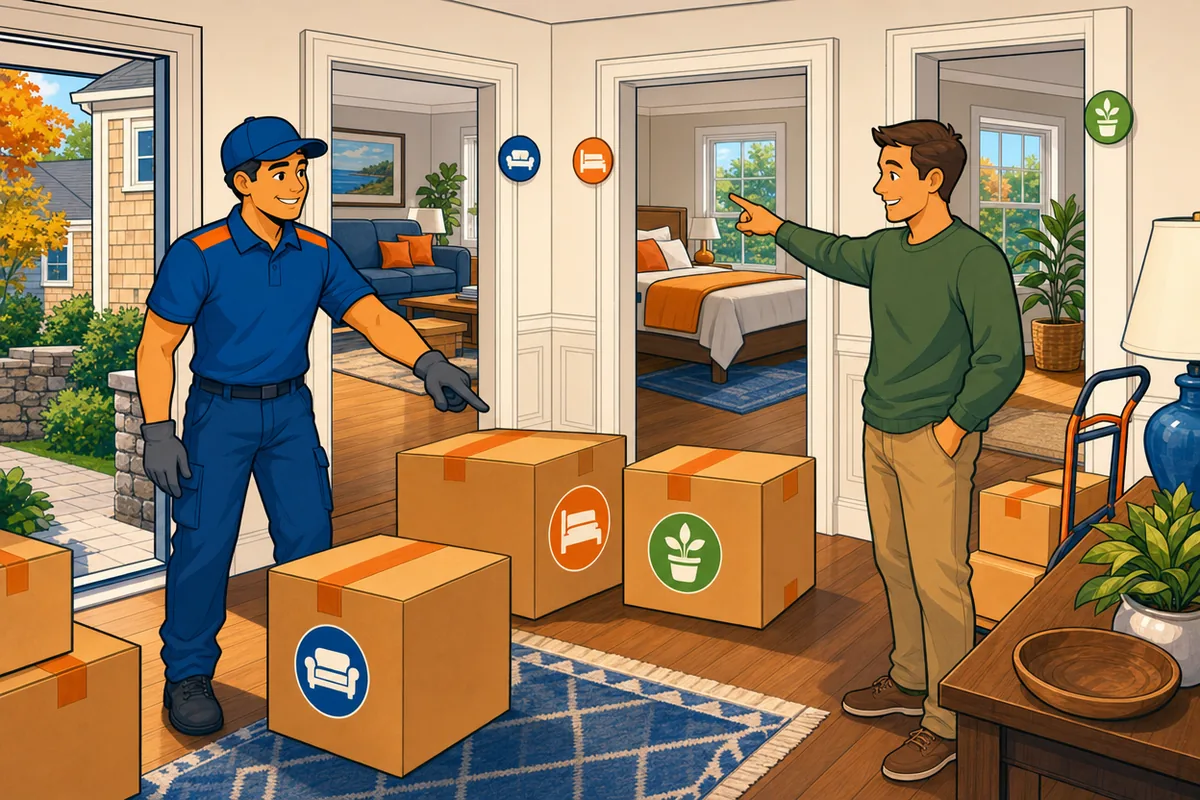
The system only works if the names on the boxes match the names on the rooms. When you get to the new house, tape a small sign to each door with the exact room name from your list, a piece of paper on the door frame is fine. Don’t rely on memory.
- A mover carrying a box labeled Office should see the word Office on the door, not guess which room you meant.
- If you change a room name mid-move, cross out the old name and write the new one clearly; don’t leave both visible.
- If the new house has two kitchens, decide which gets which boxes and put the sign there before we start unloading.
Room labels direct placement only.
They tell the crew which room gets each box; they don’t tell us to unpack, put dishes in cabinets, or arrange your things. If you want unpacking help, agree to it separately before moving day.
- If the crew has a question about where a box goes, point to the door sign or the written list.
- If you’re working with a local team, mention your labels when you book residential movers in Norwalk, a good crew appreciates the heads-up.
- Label boxes as you pack them, not after.
- Keep a marker and tape in each room so you can label on the spot.
Before loading, we’ll visually check each box, a bulging, overloaded, or poorly taped box gets flagged before it goes on the truck, and we’ll agree on a fix together.
A short planning checklist
- Name the destination rooms first.
- Write labels on the sides people see.
- Keep priority and fragility separate.
- Use the same room names when you arrive.
- Keep your contact details and moving arrangements easy to find.
Tell the team if your inventory, access, or timing changes.